MOMO MIYAZAKI

Redesigning California's public benefits applications

State of California, Employment Development Department

QUALITATIVE RESEARCH
DESIGN OPERATIONS
PROJECT MANAGEMENT

CONTEXT, BRIEF, AND MY ROLE
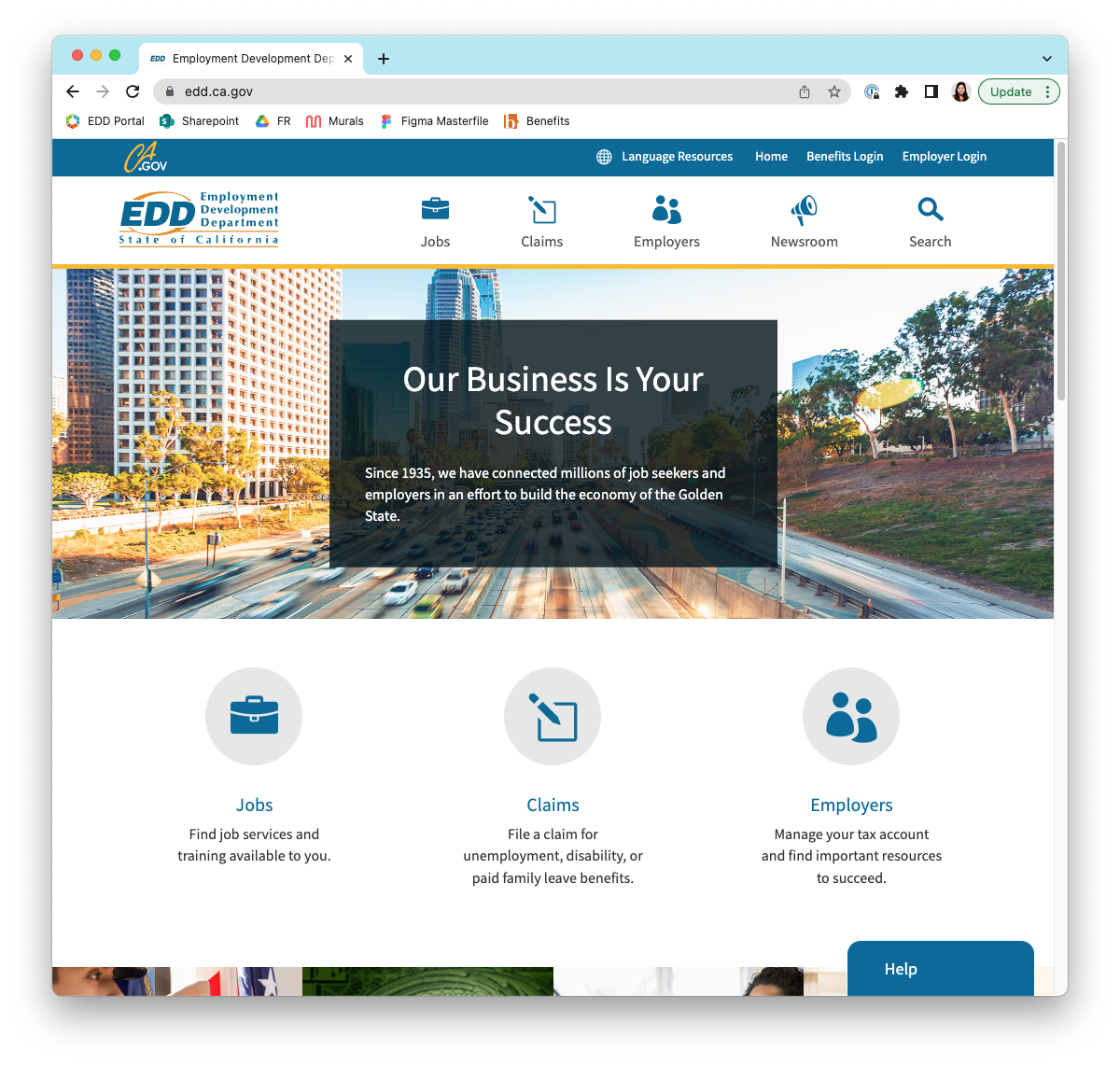
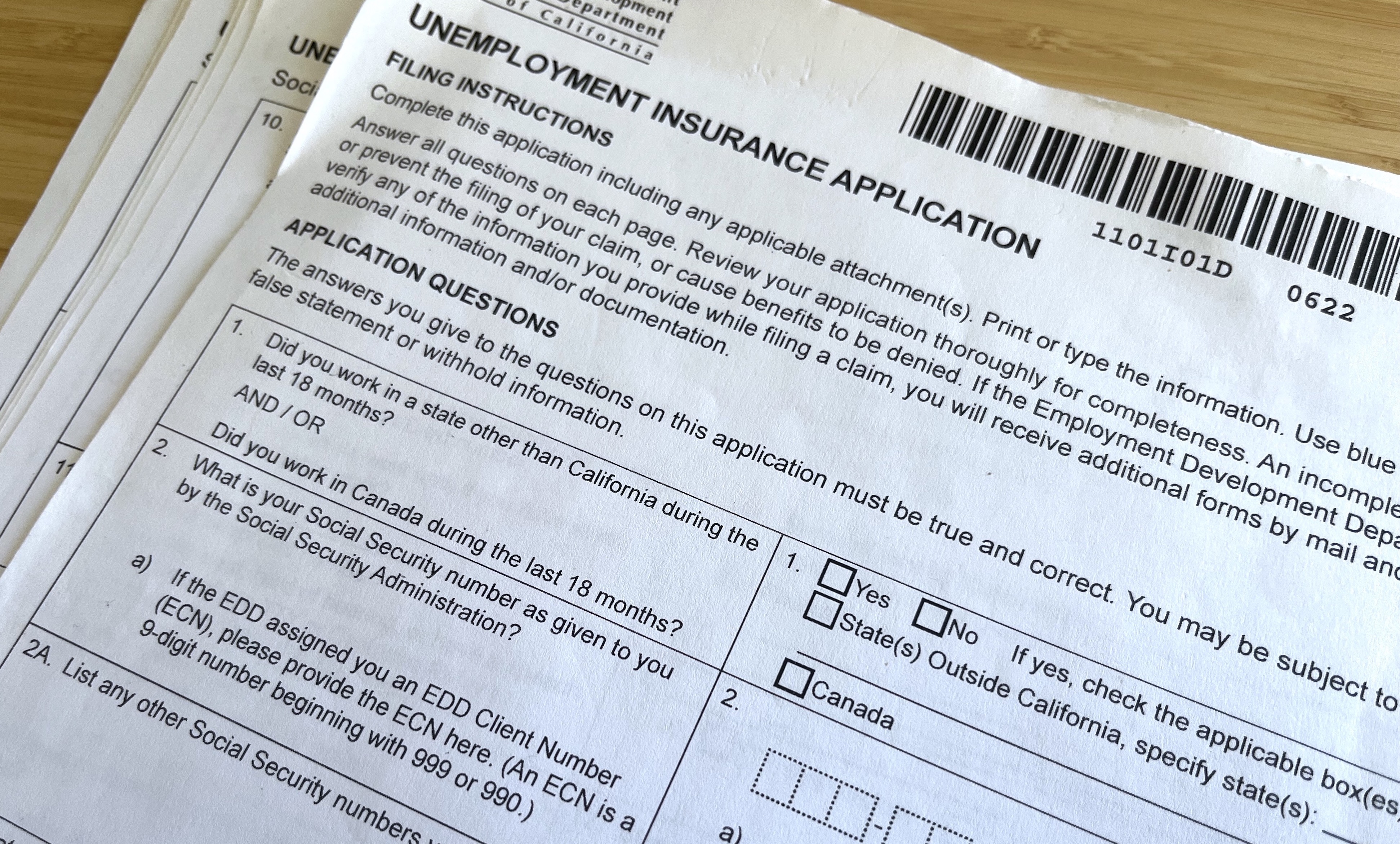
California's Employment Development Department (CA EDD) asked Nava PBC to redesign their unemployment, disability, and paid family leave benefit applications. After a public-facing fraud scandal during the pandemic, reports that quantified the impact of a poorly designed application, and years of complaints from employees and the public, the EDD was finally ready to rewrite the application questions. Visual layout and web application were not part of this phase of the larger Forms Redesign project.

CA EDD had an internal content design team who focused primarily on the content design. I led the research, synthesis, and design recommendations for the unemployment benefits application. I onboarded to the project first, so I was heavily involved in the project management and scoping, as well as establishing processes and deliverable structures that shaped the efforts for the disability and paid family leave applications.

DESIGN OUTCOME

The final outcome was a rewritten content based on iterative research and design. Content was shaped by California residents, legal advocacy groups, EDD call center employees, EDD claims filers, EDD department employees, and EDD policy and legal teams.

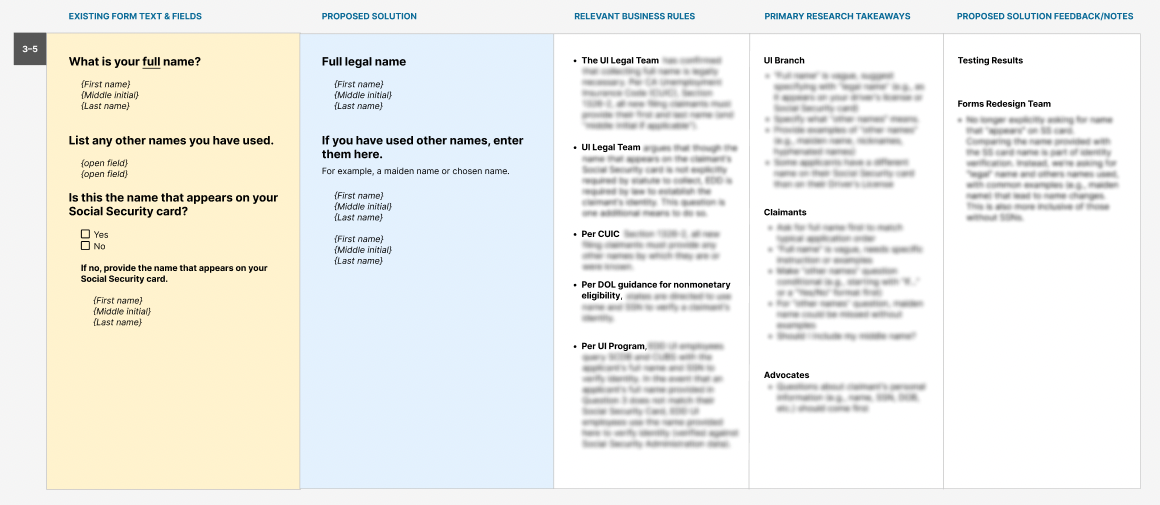
The intent of the final Figma document was show the redesigned content and also to explain the thinking behind the proposed verbiage. There is a lot of pressure and politics that guide the overall Forms Redesign project, so it was important for us to show any data that support the content changes. This document will be shared with the approval team and management.


Below: Example of a question that has evolved with input from the various research groups (text redacted)

01
NARROWING ON A SCOPE

The project began with the optimistic proposal to "redesign the forms". After multiple conversations with EDD, it was revealed that there were thousands of forms that needed redesigning; an exciting opportunity, but way too much for the 10 month contract!

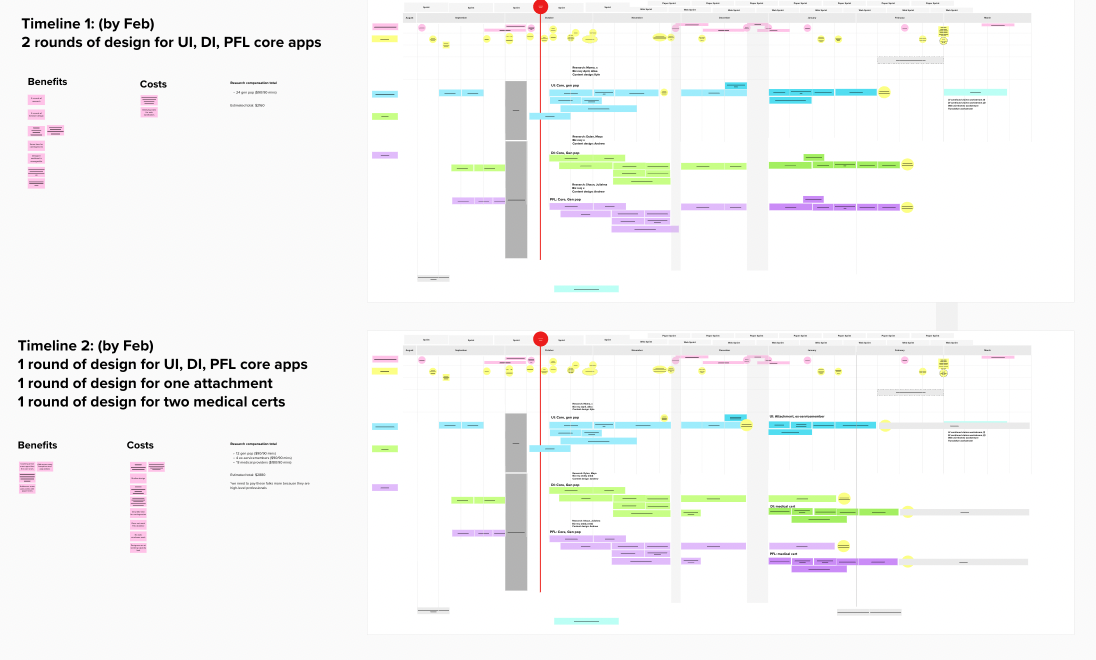
I facilitated conversations about the scope and brought timeline visualizations that showed the different variables we could play with in order to find a scope that would make everyone happy. The scope continued to evolve throughout the project as the EDD project manager learned more about the department's priorities. Ultimately, we landed on bringing on more designers to do two rounds of research and design on the core, initial applications for the unemployment, disability, and paid family leave benefits.

The visualizations helped EDD understand how much time it would take to do certain design/research tasks, the sensitive timeline dependencies, and what their original scope meant for Nava resources.


Right: Multiple project scope and timeline options.

02
RESEARCH AND RECRUITING

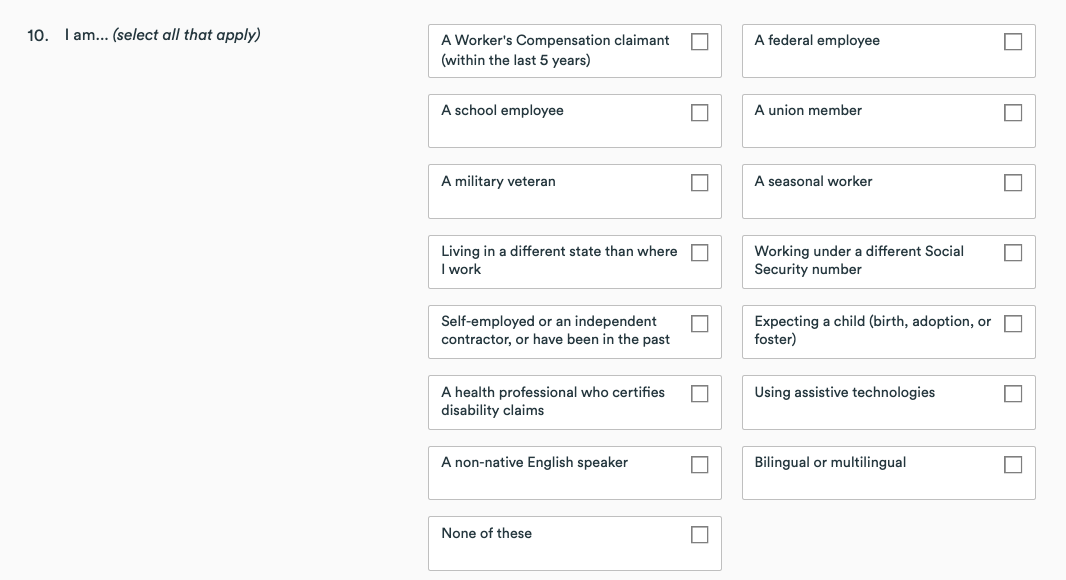
Since EDD had never done qualitative research with people who had never applied for state benefits, we decided to prioritize that demographic for one research round. We used Craigslist and post an Ethnio screener questionnaire. We selected our research participants based on various demographics, and emailed them to schedule a research session.

This process was successful; out of 15 sessions, only 2 were fraudulent or no-show.

Right: Qualifying special demographics question from the screener

03
CREATING TEMPLATES FOR OTHER WORKSTREAMS
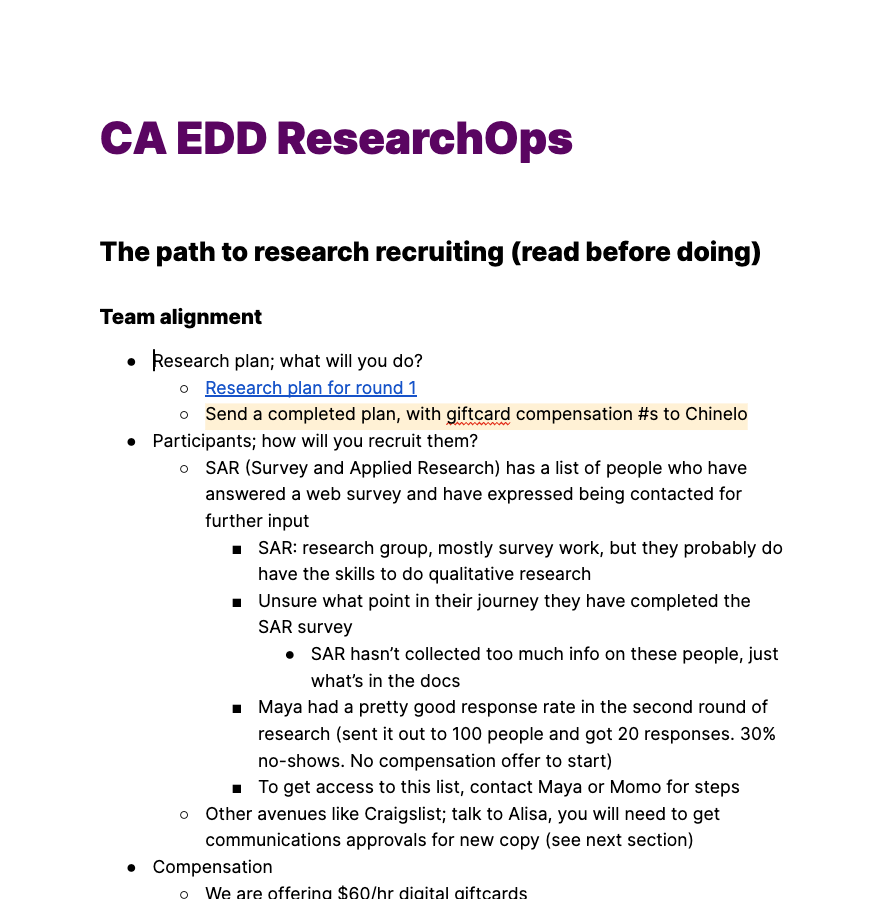
We set up the project to stagger the three workstreams, with each team working on the unemployment, disability, or paid family leave benefits. I led the unemployment insurance (UI) workstream, which started two weeks before the DI and PFL workstreams.

Because UI "went first" with all of the research and design activities, I established approval processes and created template documents that the other workstreams used.

Documents and templates facilitated efficient onboarding for new Nava and EDD teammates, alignment on research processes, research activity templates for faster approvals, and outlines for research reports.

Right: A Research Operations document to align the team on research planning, recruiting, and session operations.

04
COLLABORATING WITH EDD ON CONTENT

The EDD content team led the copy editing of the questions. We held hours-long sessions to review each original question, all of the research feedback and policy requirements for that question, and brainstorm ideas for rewrites. All of the inputs had been documented, but it was important for us to slowly comb through each research story so that we were all aligned on the approach for rewrites.

After rewriting the questions, we emailed the revisions and supporting rationale behind them to the heads of the unemployment, disability, and paid family leave departments. We had multiple meetings with them to clarify the rationale and discuss further revisions. Although the number of these conversations caused timeline delays, it was important for everyone to agree on the content before submitting it to the EDD approvals department.
10-month project with: [Unemployment workstream: April Yee, Juliahna Green] [Disability workstream: Maya Wagoner] [Paid Family Leave workstream: Shaun Mosley, Dylan Smith] Chinelo Ikejimba, Michelle Garfinkel
© 2025 MOMO MIYAZAKI